<100 subscribers
Share Dialog
Share Dialog


At Nika Labs, we don’t “put games on-chain”. We’re building an IP layer, a living, composable foundation that flows across titles like @hotspring_HQ, Cozy Willow, @archerhunter_HQ, @kawaiipuzzle_HQ, so players, creators, and studios can co-own, co-develop, and co-monetize over time.
IP here is not just a static art file or an SKU in a game economy. It’s an asset with a lifecycle, history, and revenue streams => all recorded on-chain.
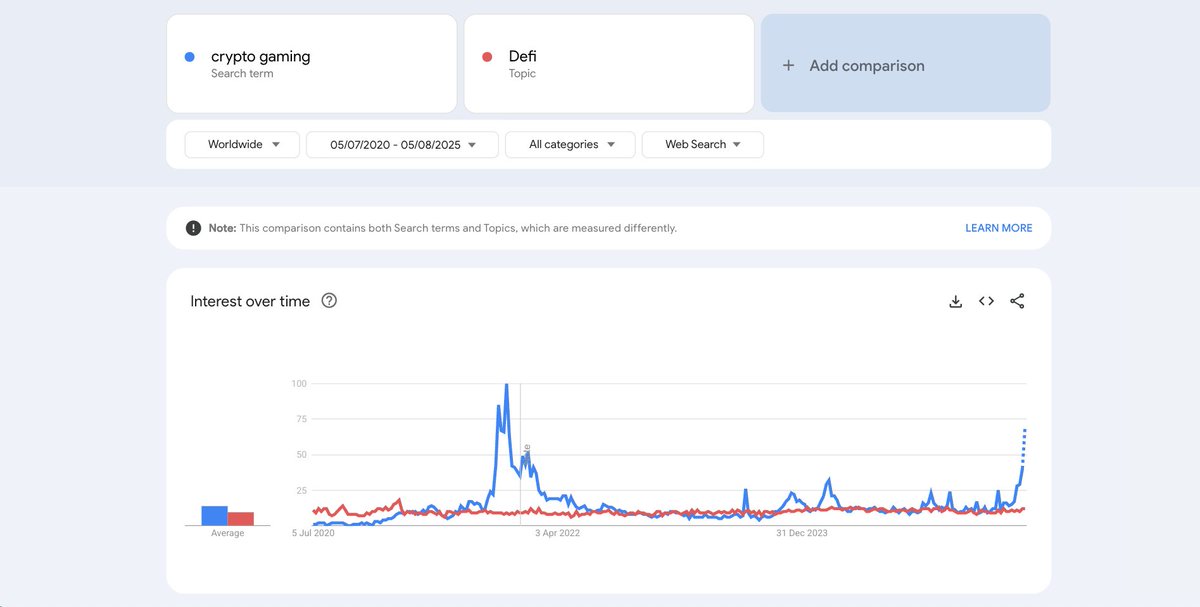
Sustainability over token hype. The 2021 “crypto gaming” spike was driven by P2E loops, but 2024–2025 is an endurance game. dUAW in gaming sits around 4.8–5.8M, competing with DeFi and AI. In a post-hype era, real value must come from IP, characters, items, lore, world building, and communities that can travel between experiences and survive beyond one game.
IP as decentralized property. The concept of “De-IP” frames NFTs as programmable ownership rights: usage, licensing, and revenue shares encoded in smart contracts, removing manual negotiation friction and enabling remix and collaboration at internet scale.
Licensing is the hardest part. Without standardized NFT licenses, creators and users are often unclear about rights (commercial use, derivatives, etc.), slowing innovation and breeding disputes. Making licenses programmable speeds creation and safeguards participants.
CC0 isn’t always the answer. CC0 maximizes remix potential -> great for memetics, but not all IP should be unbounded. Programmable IP models let creators define licensing, revenue splits, and usage rules inside the contract => think “SAFE for IP”.
At Nika Labs, our vision for IP is multi‑universe and multi‑game, spanning Hot Spring, Cozy Willow, Archer Hunter, and Kawaii Puzzle. We treat characters, items, and player narratives as dynamic assets with lifecycles. They persist, evolve, and generate value across different gaming environments. In essence, IP is not static art; it’s a composable economic vehicle on-chain.
=> For eg, Cozy Willow is based on the IP and mechanics of Hot Spring to be able to become a separate entity but create a sense of familiarity and cross economy (Spotlighted by @ProAboveMe)
Evidence shows that programmable IP where metadata, licenses, royalties, and copyright controls are embedded directly into the NFT’s smart contract => represents a significant evolution from collectible NFTs to truly dynamic IP assets.
This programmable approach gives creators the power to define terms like usage rights, revenue splits, and remix conditions within the token’s code, essentially creating a “SAFE for IP” structure — aligned with what Story Protocol terms “Programmable IP”.
This approach lets us:
Provide clear provenance and automatic revenue share execution.
Enable cross‑game asset use: characters or items that unlock new lore or income in another title.
Dynamically manage IP (e.g., increasing rarity, unlocking exclusive rights) as the same NFT travels through different games.
Together, these capabilities transform IP into an evolving, composable digital asset. Not locked to one game, but fluid across experiences.
Cross-game asset utility, a character can “moonlight” in another game, building history and reputation on-chain, which in turn unlocks derivative rights (e.g., merch or media use).
Automated revenue distribution. Remix, mods, media, and derivative works can automatically split revenue between owners, studios, and creators.
Cross-community amplification shared IP means new content in one game boosts the engagement of others.
Risk insulation if one game sunsets, the IP lives on in others or in community-generated content.
Sei is not just a settlement layer in our stack, it is the backbone that makes our on-chain IP vision function at a level acceptable to traditional gamers. For Hot Spring, Cozy Willow, Archer Hunter, and Kawaii Puzzle, the majority of our audience comes from Web2 backgrounds, with tens of millions of cumulative downloads.
This audience has been conditioned for instantaneous feedback loops, zero patience for transaction friction, and an expectation that “what you click is what you get” whether it’s starting a level, claiming a reward, or customizing a character.
Sei addresses three core demands that are critical for bringing these players into Web3 without breaking their expectations.
Speed & finality: sub-400ms block times mean licensing, transfers, and royalty actions happen invisibly in the background, in sync with the game loop.
Throughput: gigagas performance handles peak loads for major events, limited-edition mints, or IP auctions without degradation.
Gasless UX: removing transaction costs and wallet prompts at the user layer prevents the drop-offs that kill retention in traditional-gamer onboarding.
If Sei is the “physics engine” of our on-chain IP ecosystem, then our games are the worlds where that physics plays out. Without Sei’s speed, throughput, and gasless UX, the vision of portable, programmable, player-owned IP across multiple live titles would either feel clunky or be outright impossible to deliver to Web2-native audiences.
By pairing Sei’s infrastructure with our design philosophy, we are closing the gap between blockchain’s potential and mainstream gaming’s expectations.
Search trends show “crypto gaming” interest climbing again, surpassing DeFi in recent months. The difference?
This time, success depends on product quality and economic design, not speculation.
Gaming is competing head-to-head with DeFi and AI in user activity meaning on-chain IP with tangible value is the differentiator.
Unified IP base: standardized metadata, on-chain event hooks, and license profiles across all titles.
UGC + Creator Economy: tools for asset/lore creation, instant license setup, and revenue split templates, feeding directly into live ops and events.
Cross-game quests: linked missions that evolve IP history and unlock new rights.
IP analytics: tracking IP lifetime value (LTV), usage frequency, licensing revenue, and memetic spread.
If 2021 was the age of tokens, 2025+ must be the age of IP. Tokens fluctuate by the day, but IP carries history and communities have memory.
When IP is defined on-chain, licensed programmatically, and travels fluidly between games -> its value compounds, not decays.
Nika Labs will continue to prove this with real products: @hotspring_HQ, Cozy Willow, @archerhunter_HQ, @kawaiipuzzle_HQ built for discerning Web2 audiences, running on Sei to meet UX standards, and powering an IP economy where creators, studios, and players all win.
Our IP vision at Nika Labs transforms intangible digital collectibles into living, programmable assets. By embedding licensing, copyright, and revenue logic into NFTs, we create portable IP with inherent economic rules. This allows characters and items to accrue lore, value, and income across games.
Through cross-game utility, automated royalty splits, community amplification, and IP longevity beyond single game lifecycles, on-chain IP becomes a cornerstone of sustainable ecosystems. Academically, interoperability studies and retention-focused models like ServerFi underscore how on-chain IP truly enables resilient creative economies.
At Nika Labs, we don’t “put games on-chain”. We’re building an IP layer, a living, composable foundation that flows across titles like @hotspring_HQ, Cozy Willow, @archerhunter_HQ, @kawaiipuzzle_HQ, so players, creators, and studios can co-own, co-develop, and co-monetize over time.
IP here is not just a static art file or an SKU in a game economy. It’s an asset with a lifecycle, history, and revenue streams => all recorded on-chain.
Sustainability over token hype. The 2021 “crypto gaming” spike was driven by P2E loops, but 2024–2025 is an endurance game. dUAW in gaming sits around 4.8–5.8M, competing with DeFi and AI. In a post-hype era, real value must come from IP, characters, items, lore, world building, and communities that can travel between experiences and survive beyond one game.
IP as decentralized property. The concept of “De-IP” frames NFTs as programmable ownership rights: usage, licensing, and revenue shares encoded in smart contracts, removing manual negotiation friction and enabling remix and collaboration at internet scale.
Licensing is the hardest part. Without standardized NFT licenses, creators and users are often unclear about rights (commercial use, derivatives, etc.), slowing innovation and breeding disputes. Making licenses programmable speeds creation and safeguards participants.
CC0 isn’t always the answer. CC0 maximizes remix potential -> great for memetics, but not all IP should be unbounded. Programmable IP models let creators define licensing, revenue splits, and usage rules inside the contract => think “SAFE for IP”.
At Nika Labs, our vision for IP is multi‑universe and multi‑game, spanning Hot Spring, Cozy Willow, Archer Hunter, and Kawaii Puzzle. We treat characters, items, and player narratives as dynamic assets with lifecycles. They persist, evolve, and generate value across different gaming environments. In essence, IP is not static art; it’s a composable economic vehicle on-chain.
=> For eg, Cozy Willow is based on the IP and mechanics of Hot Spring to be able to become a separate entity but create a sense of familiarity and cross economy (Spotlighted by @ProAboveMe)
Evidence shows that programmable IP where metadata, licenses, royalties, and copyright controls are embedded directly into the NFT’s smart contract => represents a significant evolution from collectible NFTs to truly dynamic IP assets.
This programmable approach gives creators the power to define terms like usage rights, revenue splits, and remix conditions within the token’s code, essentially creating a “SAFE for IP” structure — aligned with what Story Protocol terms “Programmable IP”.
This approach lets us:
Provide clear provenance and automatic revenue share execution.
Enable cross‑game asset use: characters or items that unlock new lore or income in another title.
Dynamically manage IP (e.g., increasing rarity, unlocking exclusive rights) as the same NFT travels through different games.
Together, these capabilities transform IP into an evolving, composable digital asset. Not locked to one game, but fluid across experiences.
Cross-game asset utility, a character can “moonlight” in another game, building history and reputation on-chain, which in turn unlocks derivative rights (e.g., merch or media use).
Automated revenue distribution. Remix, mods, media, and derivative works can automatically split revenue between owners, studios, and creators.
Cross-community amplification shared IP means new content in one game boosts the engagement of others.
Risk insulation if one game sunsets, the IP lives on in others or in community-generated content.
Sei is not just a settlement layer in our stack, it is the backbone that makes our on-chain IP vision function at a level acceptable to traditional gamers. For Hot Spring, Cozy Willow, Archer Hunter, and Kawaii Puzzle, the majority of our audience comes from Web2 backgrounds, with tens of millions of cumulative downloads.
This audience has been conditioned for instantaneous feedback loops, zero patience for transaction friction, and an expectation that “what you click is what you get” whether it’s starting a level, claiming a reward, or customizing a character.
Sei addresses three core demands that are critical for bringing these players into Web3 without breaking their expectations.
Speed & finality: sub-400ms block times mean licensing, transfers, and royalty actions happen invisibly in the background, in sync with the game loop.
Throughput: gigagas performance handles peak loads for major events, limited-edition mints, or IP auctions without degradation.
Gasless UX: removing transaction costs and wallet prompts at the user layer prevents the drop-offs that kill retention in traditional-gamer onboarding.
If Sei is the “physics engine” of our on-chain IP ecosystem, then our games are the worlds where that physics plays out. Without Sei’s speed, throughput, and gasless UX, the vision of portable, programmable, player-owned IP across multiple live titles would either feel clunky or be outright impossible to deliver to Web2-native audiences.
By pairing Sei’s infrastructure with our design philosophy, we are closing the gap between blockchain’s potential and mainstream gaming’s expectations.
Search trends show “crypto gaming” interest climbing again, surpassing DeFi in recent months. The difference?
This time, success depends on product quality and economic design, not speculation.
Gaming is competing head-to-head with DeFi and AI in user activity meaning on-chain IP with tangible value is the differentiator.
Unified IP base: standardized metadata, on-chain event hooks, and license profiles across all titles.
UGC + Creator Economy: tools for asset/lore creation, instant license setup, and revenue split templates, feeding directly into live ops and events.
Cross-game quests: linked missions that evolve IP history and unlock new rights.
IP analytics: tracking IP lifetime value (LTV), usage frequency, licensing revenue, and memetic spread.
If 2021 was the age of tokens, 2025+ must be the age of IP. Tokens fluctuate by the day, but IP carries history and communities have memory.
When IP is defined on-chain, licensed programmatically, and travels fluidly between games -> its value compounds, not decays.
Nika Labs will continue to prove this with real products: @hotspring_HQ, Cozy Willow, @archerhunter_HQ, @kawaiipuzzle_HQ built for discerning Web2 audiences, running on Sei to meet UX standards, and powering an IP economy where creators, studios, and players all win.
Our IP vision at Nika Labs transforms intangible digital collectibles into living, programmable assets. By embedding licensing, copyright, and revenue logic into NFTs, we create portable IP with inherent economic rules. This allows characters and items to accrue lore, value, and income across games.
Through cross-game utility, automated royalty splits, community amplification, and IP longevity beyond single game lifecycles, on-chain IP becomes a cornerstone of sustainable ecosystems. Academically, interoperability studies and retention-focused models like ServerFi underscore how on-chain IP truly enables resilient creative economies.
No comments yet